24 hr
Rottnest Island Day Trip with Bike & Ferry from Perth
Cycle car-free Rottnest Island at your leisure with ferry transport and full-day bike hire included
ReserveHand-picked by our editors — only the best 5 experiences from 40 reviewed.
Verified partners for every tour, free cancellation where available, and instant confirmation on every booking.
24 hr
Cycle car-free Rottnest Island at your leisure with ferry transport and full-day bike hire included
Reserve
7 hr 30 min
Cycle around a stunning island paradise with ferry transport and bicycle rental included for a full day
Reserve
24 hr
Journey to a pristine island sanctuary aboard an eco-friendly ferry with flexible departure schedules
ReservePrices from verified partners. Availability updates in real time at checkout. Free cancellation policies apply where shown.
The landmarks, rooms, and views travelers on this tour remember — all visible on a single visit.
This historic landmark was first constructed in 1849 and remains a key navigational beacon for the island. It stands on the highest point, offering panoramic views of the entire region.
These underground tunnels were part of a massive military fortification built during World War II. Visitors can explore the maze of passages and the massive gun battery.
Built in 1900, this 20-meter tall iconic structure is located on the northern tip of the island. It is known for its striking white tower and red lantern room.
This site is home to a significant colony of long-nosed fur seals. It is located at the majestic West End and offers a glimpse of the island's marine wildlife.
Housed in the historic Old Mill and Hay Store, this museum serves as the cultural gateway to the island. It features displays on maritime, military, and Aboriginal history.
The self-guided experience offers superior independence for those seeking quiet coves, while the guided bus is the more convenient choice for visitors who prefer a comprehensive narrative. Most travelers find that rottnest island ferry bike and snorkel tours provide the most immersive connection to the island's natural landscape.
| Feature | Top pick Bike & Snorkel | Guided Bus Tour |
|---|---|---|
Freedom of movement |
Full autonomy | Fixed route and stops |
Physical exertion required |
High physical effort | None (seated) |
Access to secluded beaches |
Direct access | Limited to main bays |
Structured commentary |
None | Provided by driver |
Flexibility for snorkeling |
High (on demand) | None |
Planning complexity |
Requires personal logistics | Minimal (all-inclusive) |
| See tickets → |
Verdict: Choose the self-guided rottnest island ferry bike and snorkel tickets for total autonomy, or opt for the bus tour to enjoy a relaxed, informative overview of the major landmarks.
Choose your ticket, select your date, and reserve in under two minutes. Secure checkout handled by our verified partner.
Instant confirmation by email, with a mobile voucher you can save offline. No printing, no queuing at a collection desk.
Arrive at the entrance, show your voucher on your phone, and walk in. Most tickets include priority or skip-the-line access.
Practical details for your visit straight from our verified partners — hours, access, rules, and how to get there.
Wear comfortable activewear suitable for cycling and swimwear for snorkeling. Sun protection, including hats and high-SPF sunscreen, is essential for a day at Rottnest Island.
Keep your rottnest island ferry bike and snorkel gear secure by using provided bike locks. Luggage should be kept to a minimum; ferry operators offer specific advice for large items.
Photography is encouraged, especially near the quokka habitats and the island's many bays. Respect local wildlife by keeping a safe distance and avoiding flash photography of quokkas.
The island is bike-friendly, though some terrain is hilly; electric bikes are available for those requiring assistance. Most rottnest island ferry bike and snorkel tour providers accommodate mobility aids upon request.
Families often enjoy the rottnest island ferry bike and snorkel packages due to the island's vehicle-restricted roads. Kids' bikes and trailer options are typically available at major hire shops.
Pack sufficient water and snacks, though cafes are available in the main settlement. Stay hydrated while enjoying your rottnest island ferry bike and snorkel adventure.
Best time to go, insider tips, nearby landmarks, and the cancellation fine print — flip through to skim what matters to you.
Flexible, no hidden fees.
Review your specific provider's policy as Rottnest Island ferry bike and snorkel tickets often require advance notice for changes. Entrance fees of 21.5 AUD per person are generally non-refundable once processed.
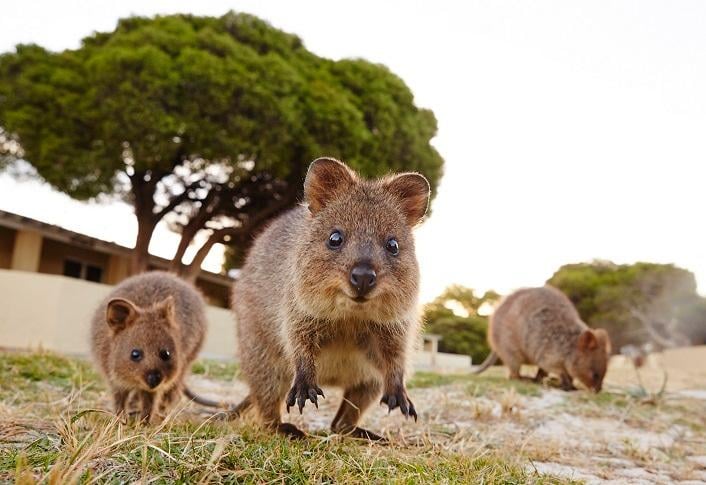
Rottnest Island carries a name given in error. Dutch mariner Willem de Vlamingh, anchoring in 1696, mistook the island's quokkas for oversized rats and recorded the place as 't Eylandt 't Rottenest — the rats' nest. The marsupials he misjudged are now the island's most photographed residents, and the Noongar name Wadjemup, meaning the place across the water, has returned to common use alongside the Dutch one. The island sits roughly 19 kilometres off the Western Australian coast, a low limestone platform 11 kilometres long and never more than 4.5 kilometres wide. It was joined to the mainland until sea levels rose some 7,000 years ago, severing it and leaving behind a landscape of salt lakes, tea-tree thickets and calcarenite dunes. Sixty-three beaches ring the coast. Twenty bays cut into it. Offshore, the Leeuwin Current draws warm tropical water south, sustaining coral communities and more than 135 fish species at the southern edge of their range — an ecological anomaly that makes a rottnest island ferry bike and snorkel day unusually rich for a temperate latitude. Human history here is layered and, in parts, sombre. From 1838 to 1931 the island served as a penal establishment for Aboriginal men and boys drawn from across Western Australia; the Quod and the burial ground remain sites of profound significance to Noongar people, and Wadjemup is now the subject of a formal reconciliation process. The Vlamingh Head lighthouse, raised in 1896 at the island's highest point, still marks the central ridge. Wartime batteries at Oliver Hill, completed in 1937, retain their 9.2-inch guns and a network of underground tunnels. Private cars have never been permitted for visitors, which is why the bicycle became the island's defining instrument. Roughly 40 kilometres of sealed road loop the coastline, connecting Thomson Bay to Geordie Bay, Little Salmon Bay and the West End. That car-free constraint shapes everything: the pace, the silence, the way a snorkel trail at Parker Point can be reached by pedal within an hour of stepping off the jetty. Rottnest Island ferry bike and snorkel tours exist because the geography insists on them. Entry to the reserve is charged at 21.5 AUD as an admission fee, per person, single day, and the island's protected status — a Class A reserve since 1917 — is what has kept the seagrass meadows and reef systems intact enough to be worth crossing an ocean channel to see.
"Vlamingh mistook the quokkas for rats and named the whole island after his error."
A step-by-step walkthrough of the visit — what you'll see, how long each stage takes, and the details that matter.
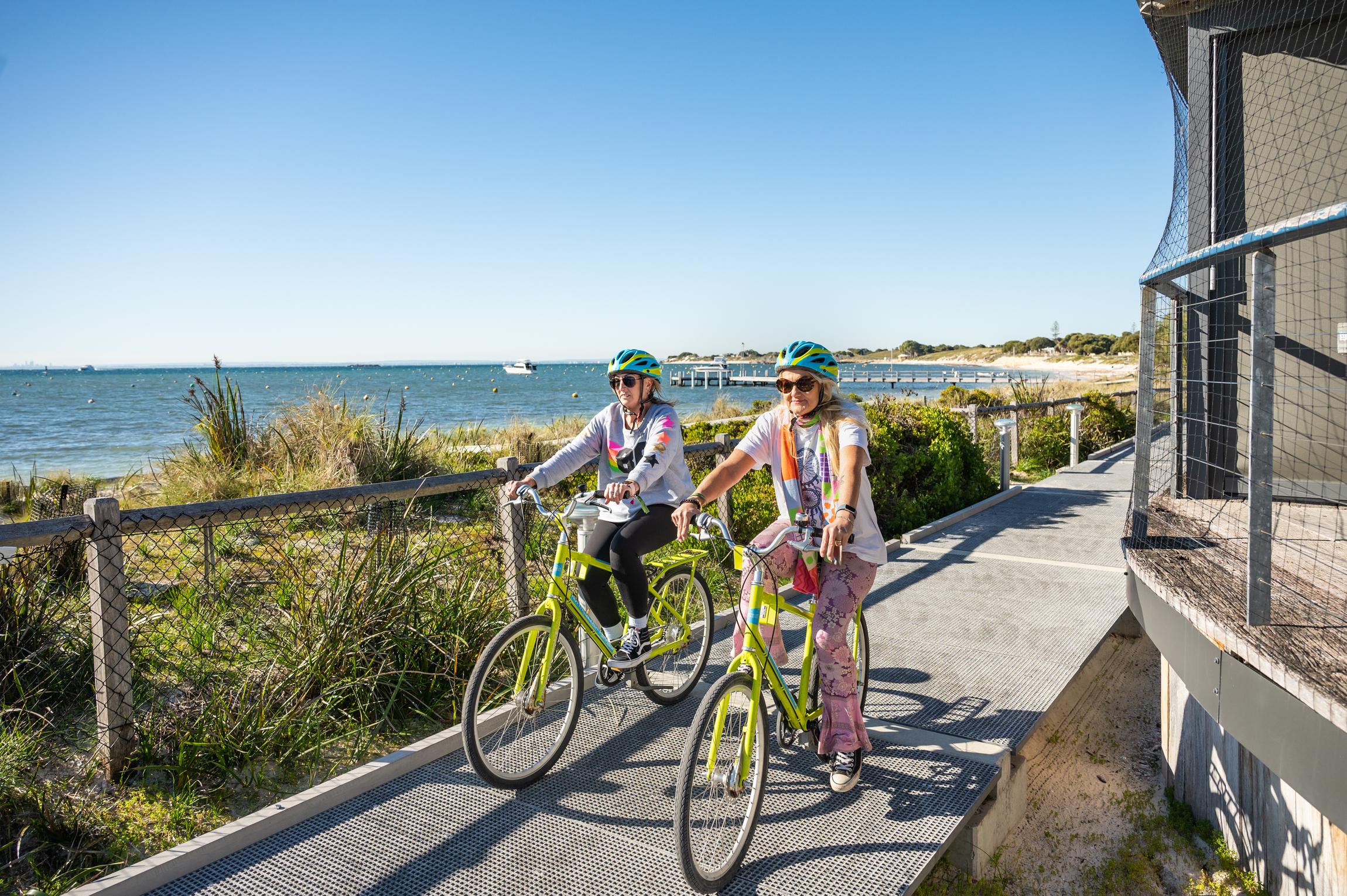
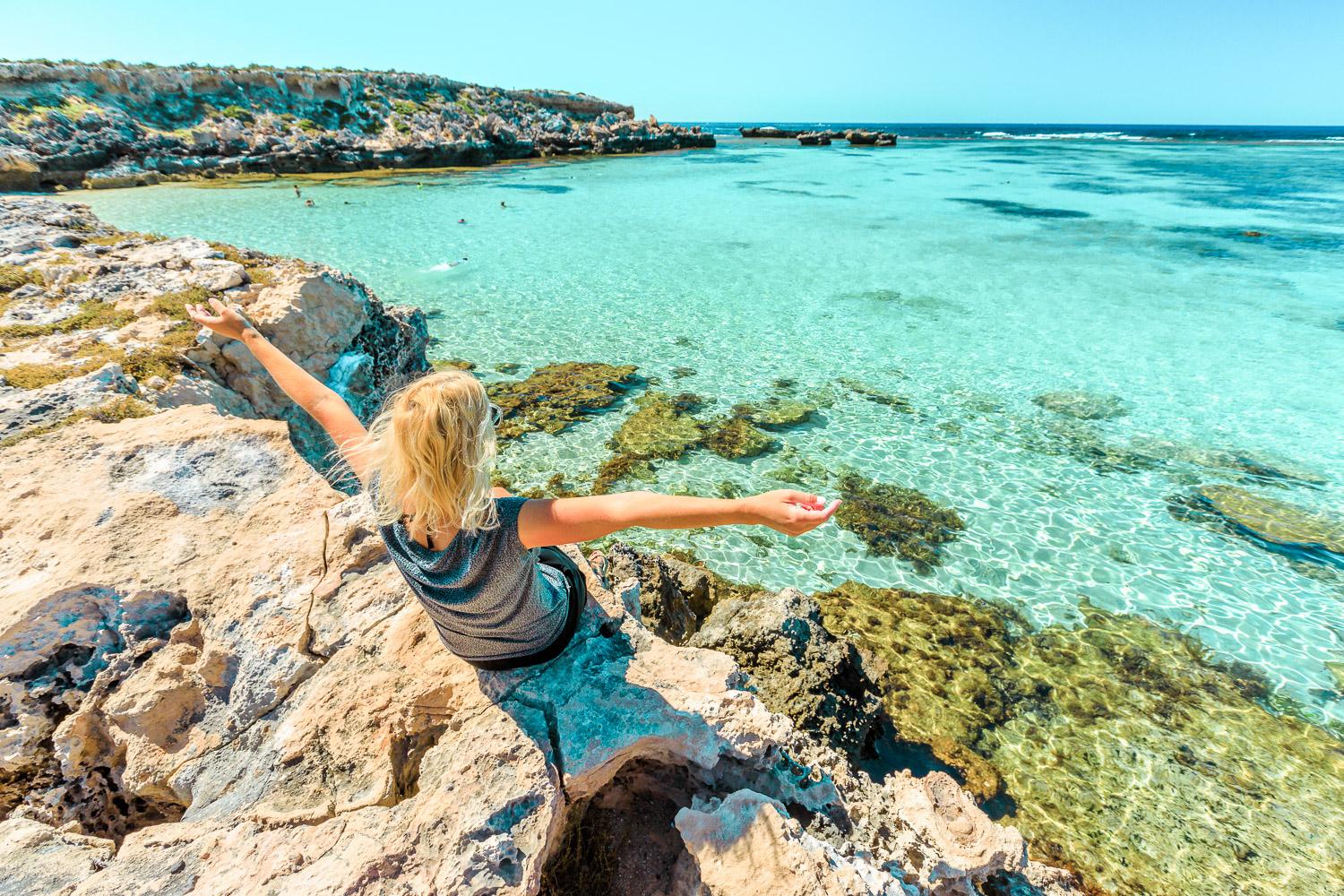
You board at Fremantle or Perth's Barrack Street Jetty and reach Thomson Bay in around 25 to 90 minutes depending on your departure point. Aim for the 07:30–10:00 arrival window — early arrival maximises daylight for cycling and snorkelling before peak afternoon winds. At the settlement you collect your bike, snorkel and fins if your package includes them, or you meet a guide for the bus circuit if you have chosen the coach option. You clip on a helmet and turn south. The road climbs gently past Bathurst Lighthouse, then opens onto the chain of salt lakes where the water sits pink in strong light. You pass a quokka at the verge; it does not move for you. At Little Salmon Bay you leave the bike unlocked against a rail — everyone does — and wade in over the seagrass to the underwater snorkel trail, where plaques mark the reef fifty metres out. By midday you push west, past Salmon Bay and the wreck markers, to the West End boardwalk where New Zealand fur seals haul out on Cathedral Rocks below. The return leg runs downwind. You rinse off at Geordie Bay, coast back into Thomson Bay, and hand in the bike before the last sailing. A rottnest island ferry bike and snorkel tour ends the way it began, on deck, watching the island flatten behind you.
The island services generally operate from 07:30 daily, closing at 17:00 except Fridays when they close at 19:00. These hours apply to the general services at the Visitor Centre and local facilities.
Yes, families find the rottnest island ferry bike and snorkel experience ideal due to the car-free roads. Most operators provide varying sizes of bikes and equipment to suit different ages.
The mandatory admission fee is 21.5 AUD per person for a single day. This is usually bundled with your ferry tickets for convenience.
Yes, it is highly recommended to book your rottnest island ferry bike and snorkel tickets in advance to ensure availability on your preferred date.
The best arrival window is 07:30–10:00 to maximize your time cycling and snorkeling before the winds pick up in the afternoon.
Yes, helmets are mandatory by law and provided with all standard rottnest island ferry bike and snorkel hires. They are fitted at the time of collection to ensure safety.
You are welcome to bring your own equipment, though many prefer the convenience of the all-inclusive rottnest island ferry bike and snorkel packages.
Check with your specific ferry operator as cancellation rules for rottnest island ferry bike and snorkel bookings vary by provider.
The Thomson Bay area is the primary arrival point for rottnest island ferry bike and snorkel visitors, offering easy access to island accommodation.